The Independent Market Observer

Lower Yields: Not the Typical Risk-Off Trade

July 15, 2016

With all of the headlines about interest rates hitting record lows—and with the worries about why this has happened and what it means—it is important to put some facts and context around what, in many ways, is an unprecedented set of circumstances. The following piece by Meagan Rogers, manager of Commonwealth’s Fixed Income Research team, does just that. She does an excellent job explaining the what, why, and how of lower yields, and I think it is well worth your time. Thanks, Meagan!

Continue reading → Leave a comment

Appearance on CNBC's Power Lunch, July 14, 2016 [Video]

July 15, 2016

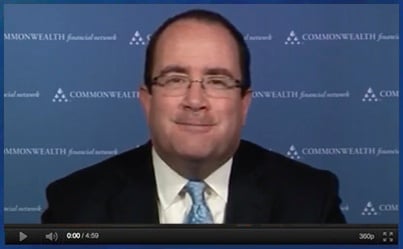
With markets returning to all-time highs, where are the opportunities? Yesterday afternoon, I was on CNBC's Power Lunch to discuss where I see chances for potential growth, including within consumer staples and financials, with co-anchor Tyler Mathisen.

Continue reading → Leave a comment

Should We Be Worried About the Chinese Currency?

July 14, 2016

After the pullback in the first quarter of the year, followed by the Brexit collapse and quick recovery, it seems as if the market has pretty much decided to head up. With U.S. markets at all-time highs and earnings coming in better than expected so far, it seems quite likely we will see continued appreciation.

That said, we also need to start thinking about what could potentially bring the stock market's updward climb to an end.

Continue reading → Leave a comment

The Market’s New High Score

July 13, 2016

This morning, the Dow Jones Industrial Average hit a new all-time high, as did the S&P 500. The news coverage seems to be split between those calling for even higher stock prices and those who are worried that a new bubble is forming.

In fact, it could be both.

Continue reading → Leave a comment

Monthly Market Risk Update: July 2016

July 12, 2016

Just as I do with the economy, I review the market each month for warning signs of trouble in the near future. Although valuations are now high—a noted risk factor in past bear markets—markets can stay expensive (or get much more expensive) for years and years, which doesn’t give us much to go on timing-wise.

Continue reading → Leave a comment

Monday Update: More Positive Surprises

July 11, 2016

For the second week in a row, the U.S. economy offered positive surprises. Both the service sector—the largest portion of the economy—and the employment market showed marked improvement, with data coming in well above expectations. Coupled with results from the previous week, the latest numbers suggest the economy has started to move again.

Continue reading → Leave a comment

Economic Risk Factor Update: July 2016

July 8, 2016

The news this month is much better than last, with the most recent economic data showing sharp increases against previously worrying downward trends. Although one month’s data won’t undo those trends, the consistency of the reversal across multiple data sets and the magnitude of the positive surprises are very encouraging.

Continue reading → Leave a comment

Tesla Crashes, Faulty Airbags, and How We Perceive Risk

July 7, 2016

One story I’ve been following is the recent fatal crash of a Tesla Model S. The car, which was set to autopilot, apparently collided into the side of a truck while the Tesla driver was watching a movie, killing him. Since then, there have been several other Tesla crashes that may have involved the autopilot function failing while the drivers weren’t paying attention.

Continue reading → Leave a comment

Record-Low Interest Rates: Not Necessarily a Bad Thing

July 6, 2016

“More than any other time in history, mankind faces a crossroads. One path leads to despair and utter hopelessness. The other, to total extinction. Let us pray we have the wisdom to choose correctly.” — Woody Allen

Continue reading → Leave a comment

Appearance on CNBC’s Squawk Box, July 5, 2016 [Video]

July 5, 2016

After a disappointing six-month period, are things turning around? Two huge headwinds—dollar strength and the collapse in oil—seem to be abating, a positive sign. I discussed these developments and other economic expectations on CNBC’s Squawk Box this morning. 

Continue reading → Leave a comment

Subscribe via Email

AI_Community_Podcast_Thumb - 1


Episode 14
December 17, 2025

Episode 13
November 19, 2025

Episode 12
October 14, 2025

Episode 11
September 10, 2025

Episode 10
August 13, 2025

More


Hot Topics


New Call-to-action

Archives

see all

Subscribe


Disclosure

The information on this website is intended for informational/educational purposes only and should not be construed as investment advice, a solicitation, or a recommendation to buy or sell any security or investment product. Please contact your financial professional for more information specific to your situation.

Certain sections of this commentary contain forward-looking statements that are based on our reasonable expectations, estimates, projections, and assumptions. Forward-looking statements are not guarantees of future performance and involve certain risks and uncertainties, which are difficult to predict. Past performance is not indicative of future results. Diversification does not assure a profit or protect against loss in declining markets.

The S&P 500 Index is a broad-based measurement of changes in stock market conditions based on the average performance of 500 widely held common stocks. All indices are unmanaged and investors cannot invest directly in an index.

The MSCI EAFE (Europe, Australia, Far East) Index is a free float‐adjusted market capitalization index that is designed to measure the equity market performance of developed markets, excluding the U.S. and Canada. The MSCI EAFE Index consists of 21 developed market country indices.

The Dow Jones Industrial Average is computed by summing the prices of the stocks of 30 large companies and then dividing that total by an adjusted value, one which has been adjusted over the years to account for the effects of stock splits on the prices of the 30 companies. Dividends are reinvested to reflect the actual performance of the underlying securities.

The Russell 2000 is a market-capitalization weighted index, with dividends reinvested, that consists of the 2,000 smallest companies within the Russell 3000 Index. It is often used to track the performance of U.S. small market capitalization stocks.

One basis point (bp) is equal to 1/100th of 1 percent, or 0.01 percent.

The VIX (CBOE Volatility Index) measures the market’s expectation of 30-day volatility across a wide range of S&P 500 options.

The forward price-to-earnings (P/E) ratio divides the current share price of the index by its estimated future earnings.

Third-party links are provided to you as a courtesy. We make no representation as to the completeness or accuracy of information provided on these websites. Information on such sites, including third-party links contained within, should not be construed as an endorsement or adoption by Commonwealth of any kind. You should consult with a financial advisor regarding your specific situation.

Member FINRASIPC

Please review our Terms of Use

Commonwealth Financial Network®