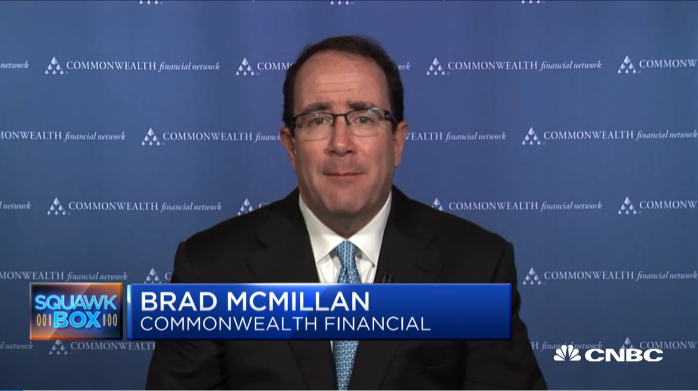
How will the markets perform in 2019, especially if rates continue to rise? I discussed this and more earlier today on CNBC's Squawk Box.


November 1, 2018
How will the markets perform in 2019, especially if rates continue to rise? I discussed this and more earlier today on CNBC's Squawk Box.

October 31, 2018
The other day in my post on the likelihood of another market crash, I pointed out that stocks could be viewed as either cheap (based on expected earnings growth and the forward P/E ratio for the past five years or so) or expensive (based on most of history before that). The real question, going forward, is whether the past five years are a better guide for the future or whether prior history is. In other words, are things different this time?

October 30, 2018
As you might imagine, I have been thinking about the financial markets quite a bit in recent days and trying (as we all have) to figure out what comes next. As I went through this process, though, it occurred to me that this is a great chance to evaluate how we think about the market as well. So for today’s post, let’s do both.

October 29, 2018
Last week was a busy one on the economic front, giving us a final view of housing for the month, as well as whether business investment continued to improve. The week concluded with a preliminary look at how the economy performed in the third quarter. In the week ahead, we’ll see data on consumer income, spending, and confidence, as well as manufacturing industry sentiment, the trade balance, and, most important, the job market.

October 26, 2018
After yesterday’s bounce, we’re seeing another bad day for the market. When I started writing this, the S&P 500 was down another 2 percent. The proximate cause here seems to be slower-than-expected revenue growth in two bellwether tech companies, Google and Amazon. They are down significantly more than the market as a whole, although the damage is widespread.

October 25, 2018
I still suspect that current market volatility will ultimately prove to be a short-lived pullback. But there is no doubt that the risks are rising. Yesterday’s drop started to show signs of what could be a break in confidence, which could lead to further losses. As such, we need to start thinking about what those losses might mean. Even if this isn’t the next big market crash, we can reasonably expect that to show up in the next couple of years. So, this line of thinking certainly isn’t wasted effort.
October 25, 2018
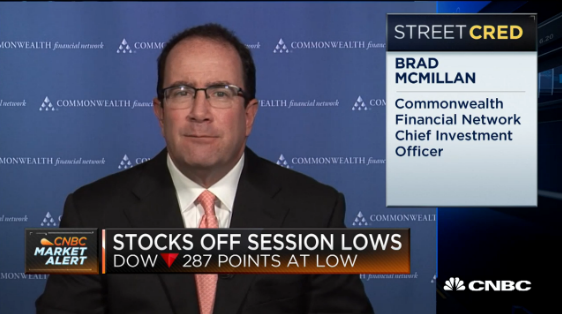
Yesterday, I appeared on CNBC's Power Lunch to discuss (no surprise here) market turbulence. Tune in to hear why I think we're experiencing normal noise, plus what sectors are performing well despite the current volatility.

October 24, 2018
We have spent the past couple of days worrying about the market dropping. Indeed, today we have a further decline. This volatility isn’t unexpected, certainly. But the further down we go, the more worried we should be—and the more inevitable further declines look.

October 23, 2018
When I started writing this today, the S&P 500 was down about 2 percent (though it's come back up a bit in the past few hours), giving us another bad day in the market. Overall, we are down approximately 8 percent from the peak. Once again, concerns are rising over whether this is the big one, the repeat of 2008.
Last week was a busy one for economic news, with a wide range of data from across the economy. This week will give us a final view of housing for the month, as well as whether business investment continues to improve. We’ll also get a preliminary look at how the economy performed in the third quarter.