
The Independent Market Observer

Brad McMillan, CFA®, CFP®

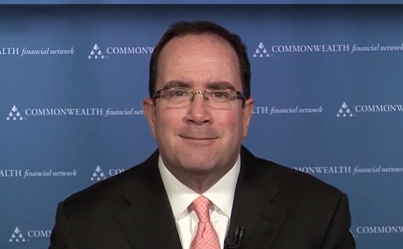
Brad McMillan, CFA®, CFP®, is managing principal, wealth management, and chief investment officer at Commonwealth. As CIO, Brad chairs the investment committee and is a spokesperson for Commonwealth’s investment divisions. Brad received his BA from Dartmouth College, an MS from MIT, and an MS from Boston College. He has worked as a real estate developer, consultant, and lender; as an investment analyst, manager, and consultant; and as a start-up executive. His professional qualifications include designated membership in the Appraisal Institute, the CFA Institute, and the CAIA Association. He also is a CERTIFIED FINANCIAL PLANNER™ practitioner. Brad speaks around the country on investment issues and writes for industry publications, as well as for this blog.
Find me on:

Recent Posts

Economic Risk Factor Update: April 2017

April 7, 2017

In March, many of the economic indicators we track experienced slight pullbacks. Given recent positive trends—and the fact that most of the metrics remain in healthy territory—I’m not that concerned. Although the weakness is certainly worth monitoring in case it becomes the start of a larger trend, all of our indicators remain in the green-light zone.


Continue reading → Leave a comment

March Jobs Report Preview

April 6, 2017

The monthly employment report comes out tomorrow, and markets are watching closely to see whether the string of positive surprises continues. If it does, it could be the start of a new upward run in the stock market. If not, it will suggest that economic strength may be starting to moderate. Either way, it will be big news.

Continue reading → Leave a comment

A Wall Street Perspective

April 5, 2017

I’m in New York today at the Goldman Sachs Asset Management Symposium, an annual event where a range of speakers discuss the markets and the world, with an eye to what might impact the future. I’m grateful to be here, listening to these smart people and trying to predict what the coming years may bring.

Continue reading → Leave a comment

Market Weather Report: Spring 2017

April 4, 2017

As I sit here looking out the window, wondering if my flight this afternoon will be able to take off, I’m reminded of the old proverb “April showers bring May flowers.” With rain coming down in buckets and expected to continue all day, we have no shortage of showers here in Boston. You could say the same for the U.S. economy and financial markets.

Continue reading → Leave a comment

Market Thoughts for April 2017 [Video]

April 3, 2017

Yet again, all I can say is wow. It was a decent month and a great quarter for markets, both in the U.S. and around the world.

Continue reading → Leave a comment

Monday Update: Consumers Confident, Just Not Spending Much

April 3, 2017

Last week’s data was generally positive, showing that consumers are feeling better and earning more. Surprisingly, spending growth continues to be weak, but that’s probably due to weather. Overall, it was a good week, but not one that significantly changes expectations going forward.

Continue reading → Leave a comment

The Market’s April Fools’ Day Jokes

March 31, 2017

What will we look back on, six or twelve months from now, and not be able to believe we didn’t see? This is always a good question to ask, but looking at the calendar, it’s particularly apropos.

What April Fools' pranks might the market be playing on us right now?

Continue reading → Leave a comment

Today's GDP Report (and What to Expect in Q2)

March 30, 2017

As we close out the first quarter of 2017, all I can say is that it’s been a great one, economically and financially. Despite all of the worry and turmoil—in Washington, DC, and elsewhere in the world—markets have risen substantially and the economy has continued to grow.

Continue reading → Leave a comment

Brexit Begins: Should U.S. Investors Care?

March 29, 2017

The big news of the day is that the United Kingdom has finally pulled the trigger on its exit from the European Union. The letter initiating Brexit was delivered this morning, and the parties now begin the two-year process of negotiating the exit terms and subsequent relationship.

Continue reading → Leave a comment

Congress, the Debt Ceiling, and the Stock Market

March 28, 2017

The health care bill was pulled from the House last week before a vote was taken, a sure sign that the support wasn't there. Speaker Paul Ryan has admitted that Obamacare will remain the law of the land for some time. President Trump has, as expected, already started to move on. The papers are trumpeting what a big blow this is to the administration and the Republican Party. 

Continue reading → Leave a comment

Subscribe via Email

AI_Community_Podcast_Thumb - 1


Episode 14
December 17, 2025

Episode 13
November 19, 2025

Episode 12
October 14, 2025

Episode 11
September 10, 2025

Episode 10
August 13, 2025

More


Hot Topics


New Call-to-action

Archives

see all

Subscribe


Disclosure

The information on this website is intended for informational/educational purposes only and should not be construed as investment advice, a solicitation, or a recommendation to buy or sell any security or investment product. Please contact your financial professional for more information specific to your situation.

Certain sections of this commentary contain forward-looking statements that are based on our reasonable expectations, estimates, projections, and assumptions. Forward-looking statements are not guarantees of future performance and involve certain risks and uncertainties, which are difficult to predict. Past performance is not indicative of future results. Diversification does not assure a profit or protect against loss in declining markets.

The S&P 500 Index is a broad-based measurement of changes in stock market conditions based on the average performance of 500 widely held common stocks. All indices are unmanaged and investors cannot invest directly in an index.

The MSCI EAFE (Europe, Australia, Far East) Index is a free float‐adjusted market capitalization index that is designed to measure the equity market performance of developed markets, excluding the U.S. and Canada. The MSCI EAFE Index consists of 21 developed market country indices.

The Dow Jones Industrial Average is computed by summing the prices of the stocks of 30 large companies and then dividing that total by an adjusted value, one which has been adjusted over the years to account for the effects of stock splits on the prices of the 30 companies. Dividends are reinvested to reflect the actual performance of the underlying securities.

The Russell 2000 is a market-capitalization weighted index, with dividends reinvested, that consists of the 2,000 smallest companies within the Russell 3000 Index. It is often used to track the performance of U.S. small market capitalization stocks.

One basis point (bp) is equal to 1/100th of 1 percent, or 0.01 percent.

The VIX (CBOE Volatility Index) measures the market’s expectation of 30-day volatility across a wide range of S&P 500 options.

The forward price-to-earnings (P/E) ratio divides the current share price of the index by its estimated future earnings.

Third-party links are provided to you as a courtesy. We make no representation as to the completeness or accuracy of information provided on these websites. Information on such sites, including third-party links contained within, should not be construed as an endorsement or adoption by Commonwealth of any kind. You should consult with a financial advisor regarding your specific situation.

Member FINRASIPC

Please review our Terms of Use

Commonwealth Financial Network®