The Independent Market Observer

2026 Midyear Outlook: What’s Next for Markets?

July 20, 2026

The first half of 2026 was shaped by market-moving headlines. The conflict in the Middle East was the most significant story, triggering a short-term market sell-off. But investors also focused on the Supreme Court’s decision that the mechanism by which the Trump administration implemented last year’s tariffs was illegal, increased scrutiny on AI infrastructure spending and the ability to earn a return on it, and a transition of Fed leadership from Jerome Powell to Kevin Warsh.

Continue reading → Leave a comment

LPL Financial 2026 Midyear Outlook: The Market Observatory [Video]

July 16, 2026

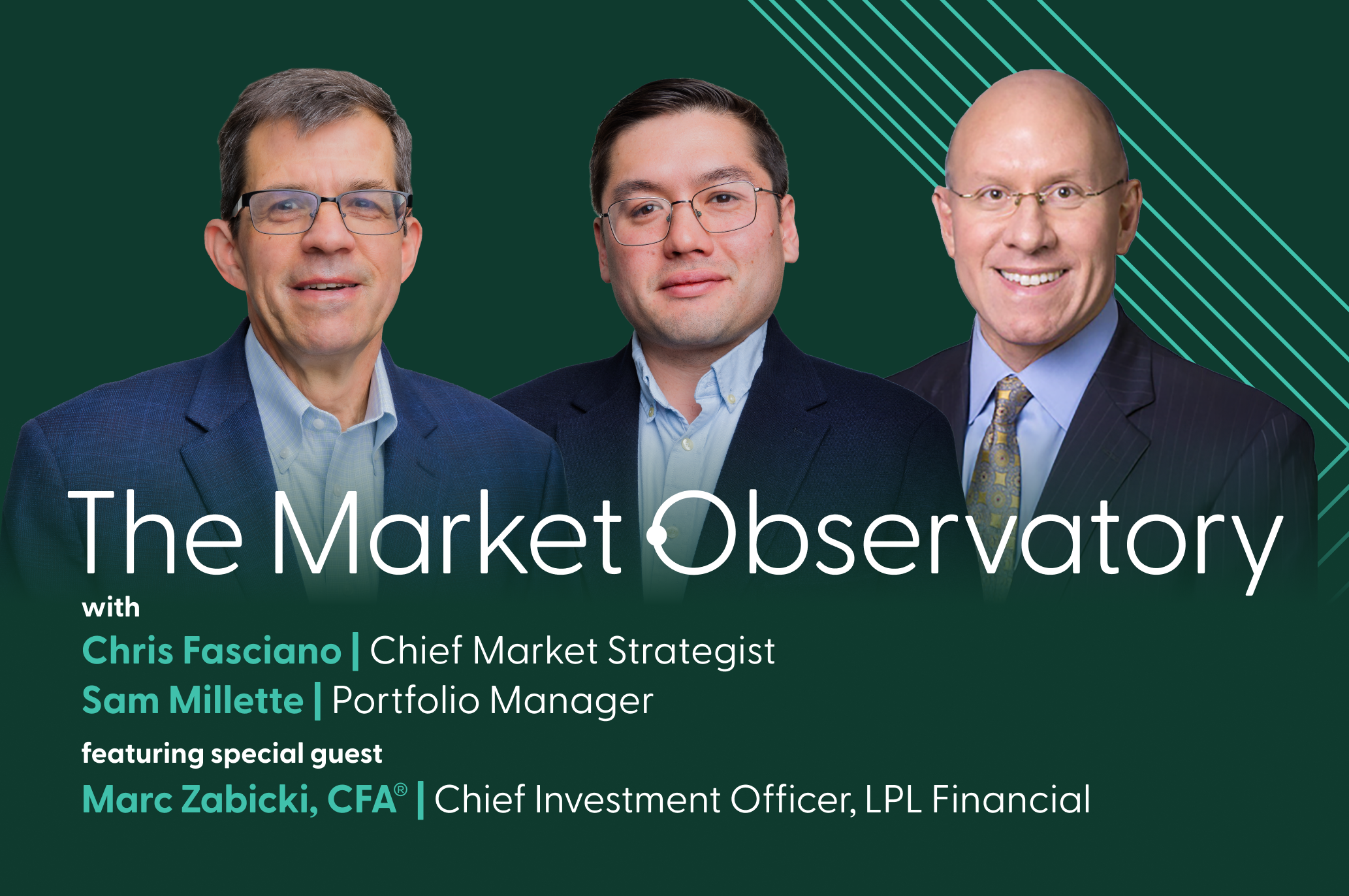
Midterm elections. A change of leadership at the Fed. The shifting AI theme. There's a lot for investors to think about as we move into the second half of the year. To help navigate the path ahead for markets and the economy, Sam and I welcomed a special guest to this month's Market Observatory, Marc Zabicki, LPL's chief investment officer.

Continue reading → Leave a comment

The Market Observatory: Will the World Cup Be a Win for the U.S. Economy? [Video]

June 17, 2026

The 2026 FIFA World Cup is in full swing. It will include 104 games played in 16 stadiums, 11 of which are in major U.S. cities. But here's the big question for investors: Will the World Cup be a win for the U.S. economy?

Continue reading → Leave a comment

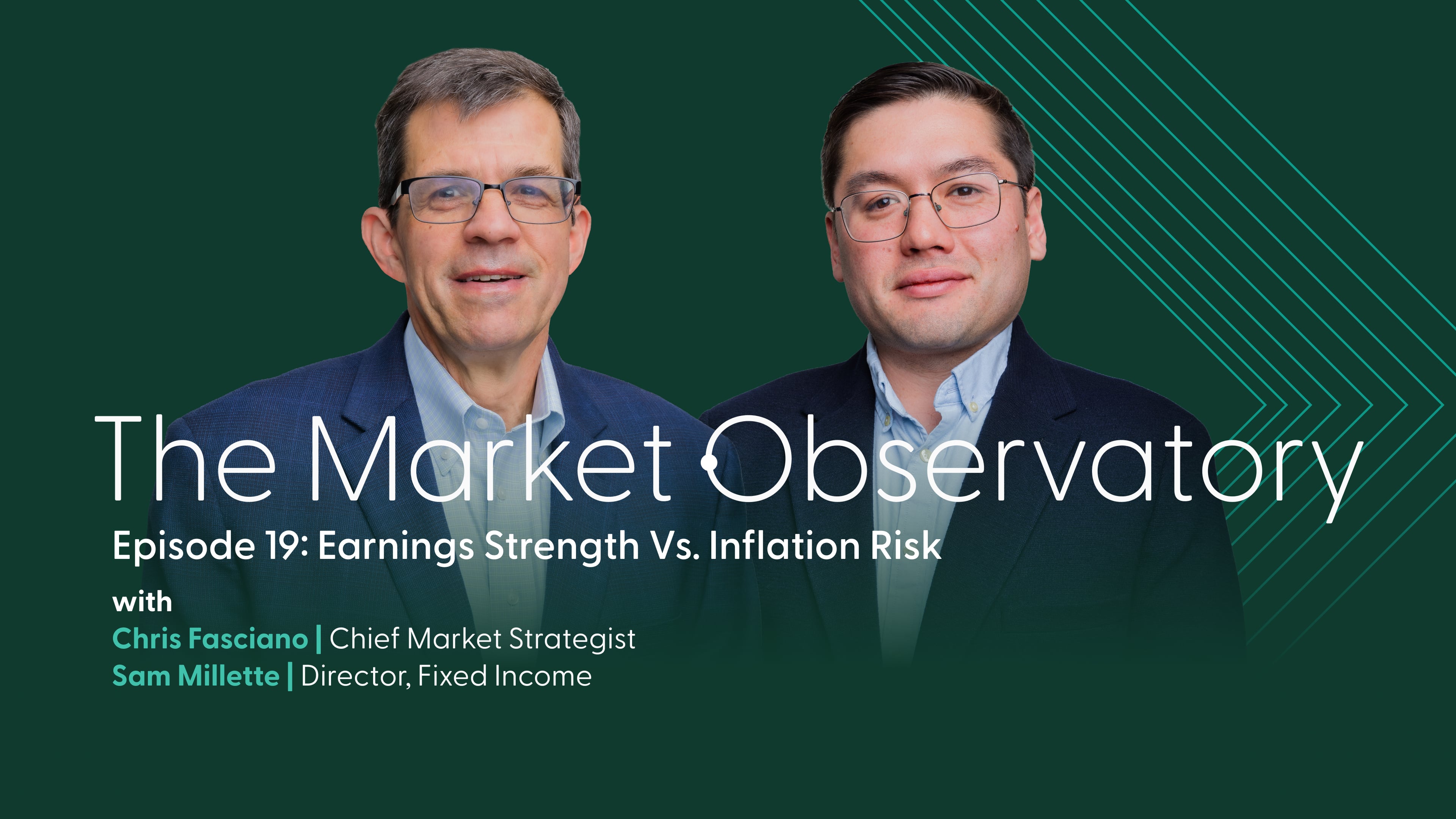
The Market Observatory: Earnings Strength Vs. Inflation Risk [Video]

May 13, 2026

Despite the ongoing conflict in the Middle East and rising oil prices, stock markets have reached all-time highs. It seems investors have been able to look past the short-term noise and focus on the fundamentals. But are there other risks on the horizon?

Continue reading → Leave a comment

Why Do Stocks Keep Moving Higher?

April 23, 2026

Stocks have been on a bit of a rollercoaster over the past two months. If your nature is to tune out the noise and check in occasionally, you might have missed it. After a 9 percent sell-off earlier in the year, markets quickly rebounded and have recently traded at all-time highs.

Continue reading → Leave a comment

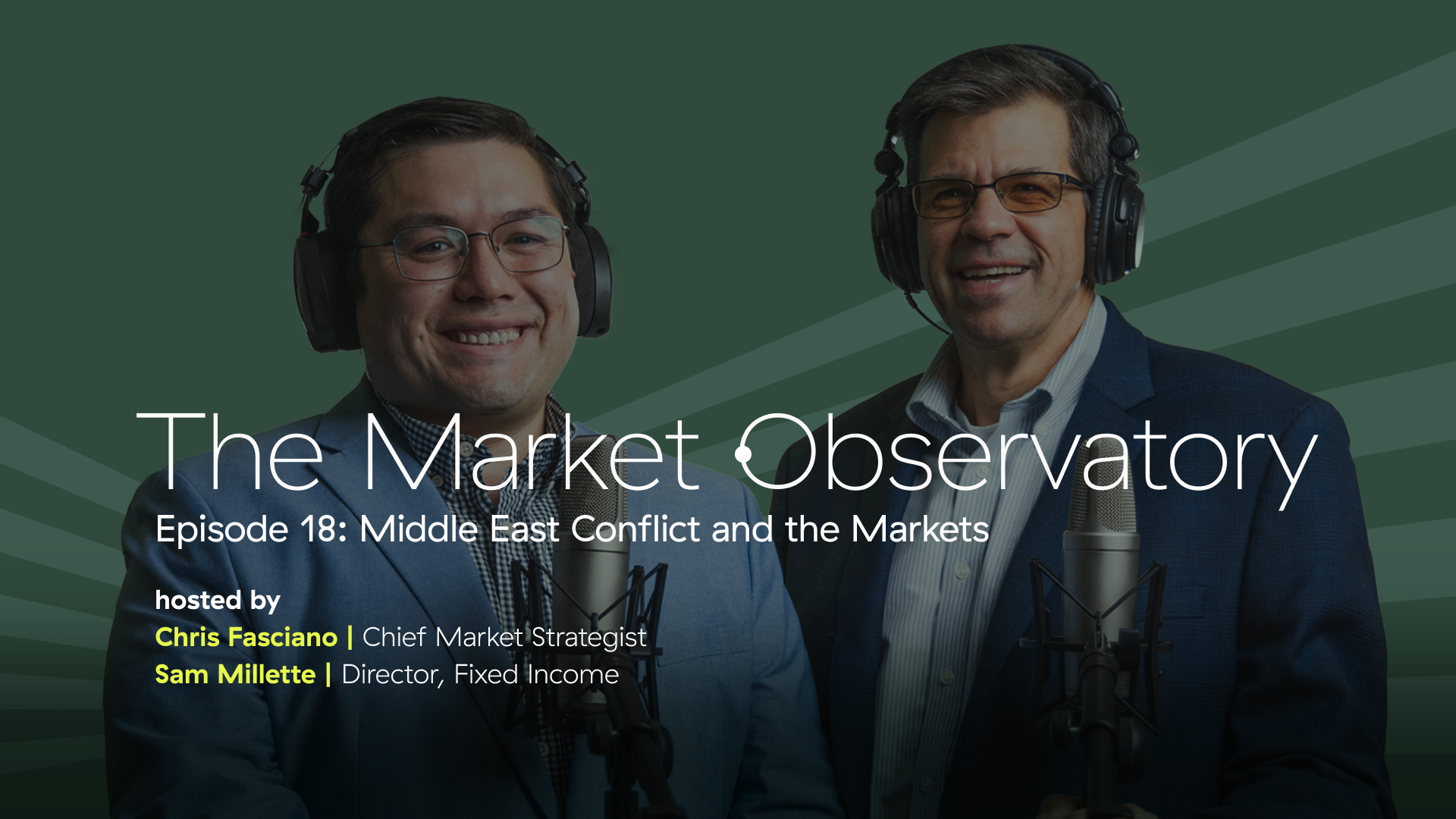
The Market Observatory: Middle East Conflict and the Markets [Audio]

April 15, 2026

As we enter the second month of the conflict in the Middle East, what impacts are we seeing on the markets and economy? In this month's episode of the Market Observatory, Sam and I look beyond the headlines and focus on the fundamentals. From corporate earnings to rising inflation to recent jobs data, a balance of headwinds and tailwinds has started to emerge for investors.

Continue reading → Leave a comment

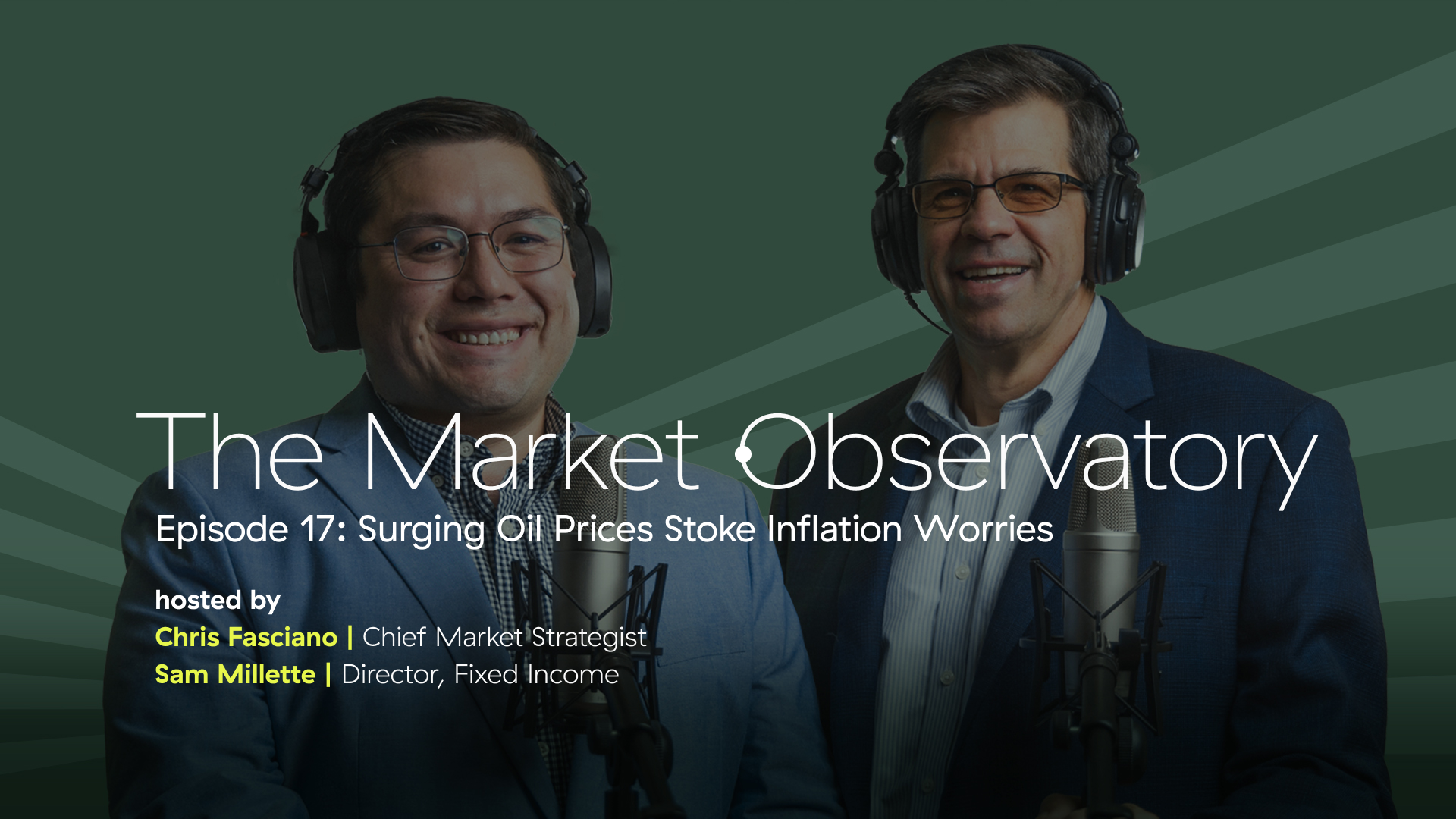
The Market Observatory: Surging Oil Prices Stoke Inflation Worries [Audio]

March 18, 2026

In this week's Market Observatory, Sam and I break down the challenging landscape the Fed must navigate in the weeks and months ahead, including surging oil prices, inflation worries, and weakness on the jobs front. What will it all mean for interest rates? Listen in to our latest episode for more:

Continue reading → Leave a comment

Surging Oil Prices Threaten Market Consensus Views

March 9, 2026

Ongoing military actions in the Middle East have increased investor uncertainty. Of course, geopolitical risk has always existed, and this time is no different. But the impact of events like these on U.S. investors will vary depending on the lasting effects on fundamental drivers of returns, such as job creation, inflation, economic growth, and corporate earnings.

Continue reading → Leave a comment

What the Supreme Court’s Tariff Decision Means for Markets and Trade

February 23, 2026

On Friday, the Supreme Court struck down most of the tariffs the Trump administration had imposed over the past year. The question before the court was not whether the tariffs themselves were illegal, but whether the mechanism by which they were enacted was legal. By a 6-3 vote, the Justices determined that the implementation of tariffs under the International Emergency Economic Powers Act (IEEPA) went beyond the authority granted. The IEEPA allows a president to act in times of genuine national emergencies rather than to take broad trade policy actions. For example, it was enacted during the post-9/11 war on global terrorism and after the Russian invasion of Ukraine.

Continue reading → Leave a comment

The Market Observatory: Shifting Risks, Solid Fundamentals [Audio]

February 11, 2026

The early months of 2026 have proven interesting for investors, with no shortage of news affecting the markets. In this month's episode of the Market Observatory, Sam and I break down an investing landscape marked by shifting risks and solid fundamentals, plus what it all means for the path ahead.

Continue reading → Leave a comment

Subscribe via Email

TMO_IMO_615x408_sidebar


Episode 17
March 18, 2026

Episode 16
February 11, 2026

Episode 15
January 15, 2026

Episode 14
December 17, 2025

Episode 13
November 19, 2025

More


Hot Topics


New Call-to-action

Archives

see all

Subscribe


Disclosure

The information on this website is intended for informational/educational purposes only and should not be construed as investment advice, a solicitation, or a recommendation to buy or sell any security or investment product. Please contact your financial professional for more information specific to your situation.

Certain sections of this commentary contain forward-looking statements that are based on our reasonable expectations, estimates, projections, and assumptions. Forward-looking statements are not guarantees of future performance and involve certain risks and uncertainties, which are difficult to predict. Past performance is not indicative of future results. Diversification does not assure a profit or protect against loss in declining markets.

The S&P 500 Index is a broad-based measurement of changes in stock market conditions based on the average performance of 500 widely held common stocks. All indices are unmanaged and investors cannot invest directly in an index.

The MSCI EAFE (Europe, Australia, Far East) Index is a free float‐adjusted market capitalization index that is designed to measure the equity market performance of developed markets, excluding the U.S. and Canada. The MSCI EAFE Index consists of 21 developed market country indices.

The Dow Jones Industrial Average is computed by summing the prices of the stocks of 30 large companies and then dividing that total by an adjusted value, one which has been adjusted over the years to account for the effects of stock splits on the prices of the 30 companies. Dividends are reinvested to reflect the actual performance of the underlying securities.

The Russell 2000 is a market-capitalization weighted index, with dividends reinvested, that consists of the 2,000 smallest companies within the Russell 3000 Index. It is often used to track the performance of U.S. small market capitalization stocks.

One basis point (bp) is equal to 1/100th of 1 percent, or 0.01 percent.

The VIX (CBOE Volatility Index) measures the market’s expectation of 30-day volatility across a wide range of S&P 500 options.

The forward price-to-earnings (P/E) ratio divides the current share price of the index by its estimated future earnings.

Third-party links are provided to you as a courtesy. We make no representation as to the completeness or accuracy of information provided on these websites. Information on such sites, including third-party links contained within, should not be construed as an endorsement or adoption by Commonwealth of any kind. You should consult with a financial advisor regarding your specific situation.

Member FINRASIPC

Please review our Terms of Use

Commonwealth Financial Network®