In my latest Market Thoughts video, I talk about the revision to the first-quarter economic growth numbers and the current state of the U.S. and international markets. You'll also hear my thoughts on potential risks, including the situation in Iraq.


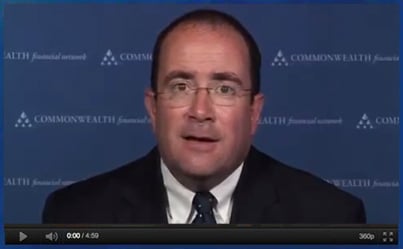
July 2, 2014
In my latest Market Thoughts video, I talk about the revision to the first-quarter economic growth numbers and the current state of the U.S. and international markets. You'll also hear my thoughts on potential risks, including the situation in Iraq.
July 1, 2014
Alpha—the excess return a money manager can generate, above and beyond the return due to general market effects—is an elusive beast.
It’s defined in opposition to beta, which reflects an investment’s tendency to respond to swings in the market. If your stock has a beta of 1, for example, it tends to move much as the market does. If the market rises 10 percent, and the stock goes up 10 percent (just as expected), how much credit should a manager get?
June 30, 2014
With all of the data out there—and all of the different takes on where the economy and financial markets are going—is there a warning sign that can tell us if the stock market is getting overextended?
I track several signals that are good economic indicators, but the stock market is tougher. There aren't any really good signals out there. Even the one I use most, the 200-day moving average, isn’t all that great.
One sign of a pending top, though, has become more apparent in recent weeks: investors are increasingly invoking 1999 to explain why the market is now reasonably priced.

June 27, 2014
I have mixed feelings about the Aereo decision.
If you haven’t heard, the Supreme Court ruled this week that Aereo—a company that uses multiple small antennas to capture TV broadcasts, which it then streams to subscribers over the web—violated copyright law.
June 25, 2014
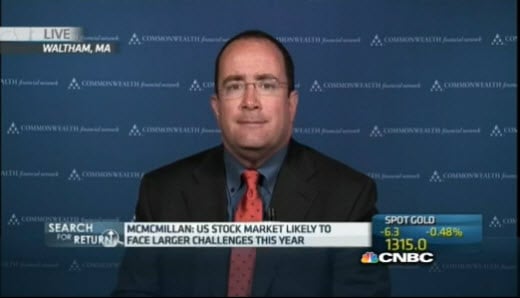
Learn why I told CNBC Worldwide Exchange that I think taking out protection against a deeper correction is a good idea at this point in an interview today, June 25.

June 25, 2014
For decades now, the U.S. has essentially had to accept the oil prices set by world markets. Starting in 1973 with the OPEC-driven oil shock, the major producers have been foreign countries. If the U.S. wanted the oil, we had to pay the price.
But are things starting to change?
June 24, 2014
Also known as the “fear index,” the VIX tends to stay low when investors are feeling confident and to spike when investors get scared. Technically, it reflects the volatility of the stock market—how much things bounce around—but on a practical level, it tends to mirror recent market performance.

June 23, 2014
A longstanding demand of much of the political class has been for the government to stop interfering in the economy.
The latest example of this is a statement by incoming House Majority Leader Kevin McCarthy, in response to a question about the U.S. Export-Import Bank: “One of the biggest problems with government is they go and take hard-earned money so others do things the private sector can do.”
As you might guess, McCarthy says he won’t support reauthorizing the bank’s charter.

June 20, 2014
The thing that interests me about the World Cup—besides the chance to watch elite players going all out—is how the results totally upend the usual global stories.
Looking at the Goldman Sachs projections for the tournament, the major powers (with the exception of Germany) are nowhere to be found. Combined, the U.S. and Russia have a 1.1-percent chance of winning it all. China isn’t even on the list. Japan is, but might as well not be. Ditto the UK.

June 20, 2014
Yesterday, June 19, I spoke with Wall Street Journal MoneyBeat's anchor, Paul Vigna, on the keys to avoiding what is being projected as an unsettled second half of 2014 for the U.S. economy.