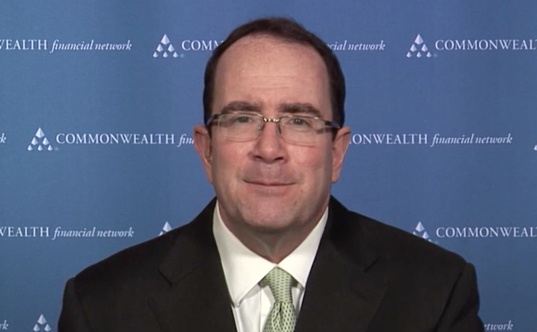
The Independent Market Observer

Should We Be Worried About a Trade War?

January 24, 2018

With the news that President Trump has imposed tariffs on solar panels and washing machines (an interesting combination), the prospect of a trade war has moved to the front of the risk parade. What do these tariffs mean for your investments and the economy? Should we be worried? Despite the headlines, the answer is “not yet.”

Continue reading → Leave a comment

Corporate Earnings for the Close of 2017: Good Despite the Headlines?

January 23, 2018

With the market surging and expectations high, I want to look at the actual corporate earnings numbers for 2017. Of course, it is early in the season to do any definitive analysis. But we can certainly set some context, which will be particularly useful for this year.

Continue reading → Leave a comment

Monday Update: Data Strong, But Pulling Back a Bit

January 22, 2018

Last week’s data included news from across the economy. Overall, the signals remained positive, despite some weakening in several areas.

Continue reading → Leave a comment

Waiting for the Government Shutdown (Again)

January 19, 2018

As I have been saying, things are pretty good, economically speaking, as we move into the new year. But there is one significant risk that we need to watch. I’m speaking of the pending deadline (midnight today) when funding for the government runs out. At that time, the U.S. debt ceiling extension ends, the government cannot borrow any more money, and—if Congress (including both Republicans and Democrats) can’t come to some sort of an agreement—the government shuts down.

Continue reading → Leave a comment

Appearance on CNBC's Squawk on the Street, January 17, 2018 [Video]

January 18, 2018

As the conglomerate General Electric weighs a breakup, what will be the effect on its shares? Yesterday, I shared my thoughts on CNBC's Squawk on the Street, including challenges on the fundamentals side.

Continue reading → Leave a comment

The Tax Bill Becomes Real: Cash Repatriation

January 18, 2018

This morning, the big news was Apple’s announcement that it will bring back what appears to be essentially all of its cash held abroad to U.S. jurisdiction. The immediate impact will be substantial, with Apple saying it will pay $38 billion in taxes. If the remaining U.S. companies with cash overseas were to do the same thing, more than $300 billion would be raised—which would certainly help with the deficit and be good for governmental finances. This is a real benefit of the tax bill.

Continue reading → Leave a comment

Dow 26K: Is This One Different?

January 17, 2018

With the Dow opening above 26,000 yesterday morning, I was all set to continue down the same path of my Dow 24K and Dow 25K posts. Alas, it wasn’t to be. Although markets are up, the Dow is below the magic number as I write this, which is certainly okay. It would not be a bad thing to take a little longer to hit another milestone, as I noted in those previous posts. But what was really interesting about yesterday was not that the milestone was cracked. Rather, it was that sentiment changed and pulled it down again. Past breaks, on the other hand, have driven the market higher. Is this one different?

Continue reading → Leave a comment

Monday Update (on Tuesday): Prices Steady, Consumers Spending

January 16, 2018

Last week was a slow one for data releases, with only consumer prices and retail sales. Overall, the news remained good. The expansion continued, with inflation maintaining a moderate pace and consumers spending freely.

Continue reading → Leave a comment

Appearance on CNBC's Nightly Business Report, January 11, 2018 [Video]

January 12, 2018

Yesterday, I appeared on CNBC’s Nightly Business Report (my segment starts at 11:09) to discuss the effect of rising interest rates on utility investments. Although there are some short-term concerns for investors, there is certainly no cause for panic. Listen in to learn more.

Continue reading → Leave a comment

What Do Higher Interest Rates Mean for Investments?

January 12, 2018

With interest rates rising recently, I have received a number of questions about what that means for our investments. It’s not as simple a question as you might think. As such, it is worth taking some time to think things through.

Continue reading → Leave a comment

Subscribe via Email

AI_Community_Podcast_Thumb - 1


Episode 14
December 17, 2025

Episode 13
November 19, 2025

Episode 12
October 14, 2025

Episode 11
September 10, 2025

Episode 10
August 13, 2025

More


Hot Topics


New Call-to-action

Archives

see all

Subscribe


Disclosure

The information on this website is intended for informational/educational purposes only and should not be construed as investment advice, a solicitation, or a recommendation to buy or sell any security or investment product. Please contact your financial professional for more information specific to your situation.

Certain sections of this commentary contain forward-looking statements that are based on our reasonable expectations, estimates, projections, and assumptions. Forward-looking statements are not guarantees of future performance and involve certain risks and uncertainties, which are difficult to predict. Past performance is not indicative of future results. Diversification does not assure a profit or protect against loss in declining markets.

The S&P 500 Index is a broad-based measurement of changes in stock market conditions based on the average performance of 500 widely held common stocks. All indices are unmanaged and investors cannot invest directly in an index.

The MSCI EAFE (Europe, Australia, Far East) Index is a free float‐adjusted market capitalization index that is designed to measure the equity market performance of developed markets, excluding the U.S. and Canada. The MSCI EAFE Index consists of 21 developed market country indices.

The Dow Jones Industrial Average is computed by summing the prices of the stocks of 30 large companies and then dividing that total by an adjusted value, one which has been adjusted over the years to account for the effects of stock splits on the prices of the 30 companies. Dividends are reinvested to reflect the actual performance of the underlying securities.

The Russell 2000 is a market-capitalization weighted index, with dividends reinvested, that consists of the 2,000 smallest companies within the Russell 3000 Index. It is often used to track the performance of U.S. small market capitalization stocks.

One basis point (bp) is equal to 1/100th of 1 percent, or 0.01 percent.

The VIX (CBOE Volatility Index) measures the market’s expectation of 30-day volatility across a wide range of S&P 500 options.

The forward price-to-earnings (P/E) ratio divides the current share price of the index by its estimated future earnings.

Third-party links are provided to you as a courtesy. We make no representation as to the completeness or accuracy of information provided on these websites. Information on such sites, including third-party links contained within, should not be construed as an endorsement or adoption by Commonwealth of any kind. You should consult with a financial advisor regarding your specific situation.

Member FINRASIPC

Please review our Terms of Use

Commonwealth Financial Network®