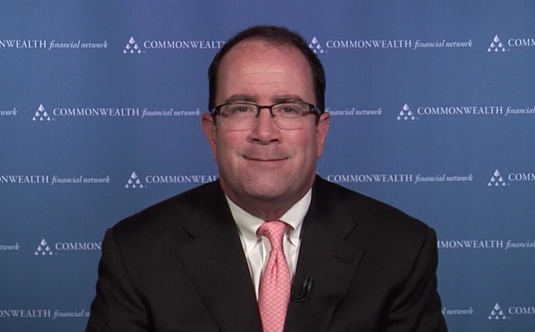
Earlier today, I appeared on CNBC's Power Lunch to discuss the Fed’s most recent rate hike and its impact on the markets. Listen in to learn more.
June 14, 2018
In part 1 of this series, we discussed how, overall, tariffs can create localized benefits (e.g., helping a particular industry), but they do so by imposing higher costs on the rest of the economy. We also discussed the wider implications—primarily that when a country imposes tariffs, there is a real possibility that other countries will retaliate. This leads to a vicious circle that leaves everyone worse off. Economically, tariffs don’t make a lot of sense.
June 13, 2018
Trade and tariffs just made the front pages in a big way with the confrontation between the U.S. and other countries at the recent G7 summit. Terms like trade war are being thrown around, and Canada (Canada!) is openly threatening retaliation. So, now seems a good time to take a look at what is really happening—and what it might mean for us and our investments.
June 12, 2018
With emerging markets hitting the headlines once again, today we have a great piece from Commonwealth analyst Anu Gaggar on what is going on and—more important—what to do about it. Take it away, Anu! — Brad
There were only two major economic news releases last week, but the week ahead will be a busy one.
June 8, 2018
Market risks come in three flavors: recession risk, economic shock risk, and risks within the market itself. So, what do these risks look like for June? Let’s take a closer look at the numbers.
June 7, 2018
May’s data improved over an already solid April. Job growth accelerated further, and consumer confidence remained strong. Business confidence also bounced back, taking the trend back to positive territory. Finally, Fed policy continues to be stimulative, which is helpful despite the likely rate increase this month. Overall, the economic data indicates that growth continues and that the recent soft spot may be passing.
June 6, 2018
This will be a short post as I am traveling. I spent last weekend in London, where I saw (to my delight!) not one but several black swans.
As we head further into June, let’s take a moment to look back at May’s economic news, plus what to expect in the month ahead.
June 4, 2018
Last week’s reports gave us a broad look at the economy, from employment to manufacturing. This week, we will see two major releases.
Episode 13
November 19, 2025
Episode 12
October 14, 2025
Episode 11
September 10, 2025
Episode 10
August 13, 2025
Episode 9
July 23, 2025
The information on this website is intended for informational/educational purposes only and should not be construed as investment advice, a solicitation, or a recommendation to buy or sell any security or investment product. Please contact your financial professional for more information specific to your situation.
Certain sections of this commentary contain forward-looking statements that are based on our reasonable expectations, estimates, projections, and assumptions. Forward-looking statements are not guarantees of future performance and involve certain risks and uncertainties, which are difficult to predict. Past performance is not indicative of future results. Diversification does not assure a profit or protect against loss in declining markets.
The S&P 500 Index is a broad-based measurement of changes in stock market conditions based on the average performance of 500 widely held common stocks. All indices are unmanaged and investors cannot invest directly in an index.
The MSCI EAFE (Europe, Australia, Far East) Index is a free float‐adjusted market capitalization index that is designed to measure the equity market performance of developed markets, excluding the U.S. and Canada. The MSCI EAFE Index consists of 21 developed market country indices.
One basis point (bp) is equal to 1/100th of 1 percent, or 0.01 percent.
The VIX (CBOE Volatility Index) measures the market’s expectation of 30-day volatility across a wide range of S&P 500 options.
The forward price-to-earnings (P/E) ratio divides the current share price of the index by its estimated future earnings.
Third-party links are provided to you as a courtesy. We make no representation as to the completeness or accuracy of information provided on these websites. Information on such sites, including third-party links contained within, should not be construed as an endorsement or adoption by Commonwealth of any kind. You should consult with a financial advisor regarding your specific situation.
Member FINRA, SIPC
Please review our Terms of Use.
Commonwealth Financial Network®