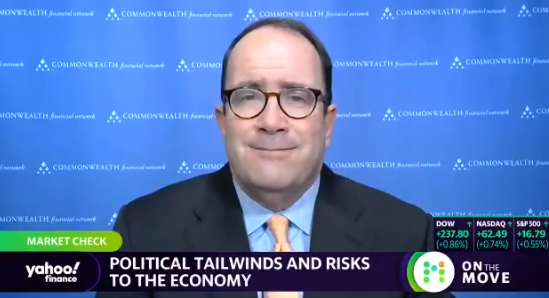
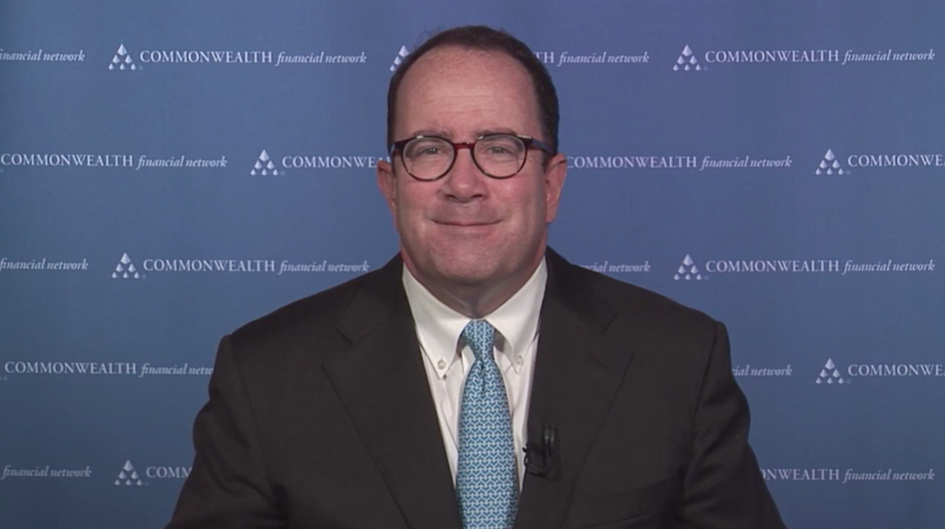
Do I think the stock buyback boom is over? I discussed this and more today on CNBC’s Power Lunch.
October 21, 2019
Do I think the stock buyback boom is over? I discussed this and more today on CNBC’s Power Lunch.
October 21, 2019
Last week, important updates on retail sales, home builders, and industrial production yielded mixed results. This week, we’re expecting some more ups and downs, with updates to come on home sales, durable goods, and consumer confidence.
October 18, 2019
In yesterday’s post, we concluded that interest rates were influenced—but not set—by the Fed. We also observed that rates were influenced—but not set—by the supply and demand of capital. We noted in both cases, however, that there was considerable variance over what those two models indicated, which suggests there is something else going on.
October 17, 2019
We closed yesterday’s post with the observation that economic theory doesn’t really have a good grip on where interest rates come from. Today, I want to explore where we think rates come from and what that might mean.
October 16, 2019
Yesterday, we started out this series with the observation that interest rates are likely transitioning to a new normal, which is different from the old normal. In other words, all of the projections that assume rates will be getting back to normal are wrong—because the definition of normal has changed.
October 15, 2019
Brexit. The impeachment. Hong Kong. The trade war. That’s a lot to discuss and to worry about. As always, though, there is a difference between what makes the headlines and what really matters. Not that those issues don’t matter—of course, they do. But in a couple of weeks or months, we will be talking and worrying about something completely different. Headlines come and go, but the deeper issues show their effects over years.
Do I think it's going to be a tough earnings season for banks this year? I discussed this and more (my segment begins at 5:31) yesterday afternoon on Bloomberg TV's Bloomberg Markets: The Close.
Last week’s news focused on inflation, consumer confidence, and the minutes from the Fed’s most recent meeting. This week will be another busy one, with reports on retail sales, housing, and industrial production scheduled.
October 11, 2019
Brad here. Every so often, it is a great idea to go back to the basics and make sure you are doing the fundamentals right. Brian Glazer, a senior investment consultant on our Investment Consulting Services team, spends his days working with advisors to help them do just that. He put together this piece that summarizes some lessons from a legend in the investment profession. It’s a good read and a great reminder of what we should be doing. Thanks, Brian, so over to you. Have a great weekend everyone!
October 10, 2019
I have been preparing a couple of big-picture pieces over the past couple of days, including the monthly economic risk factor and market risk updates, and it has been a bit eye opening. Conditions have deteriorated more than I had realized. Although I still don’t think we are in the trouble zone, we are certainly getting closer, as was shown in this month's Economic Risk Factor Update. I wanted to get a bit more into the detail around those risks today.
Episode 14
December 17, 2025
Episode 13
November 19, 2025
Episode 12
October 14, 2025
Episode 11
September 10, 2025
Episode 10
August 13, 2025
The information on this website is intended for informational/educational purposes only and should not be construed as investment advice, a solicitation, or a recommendation to buy or sell any security or investment product. Please contact your financial professional for more information specific to your situation.
Certain sections of this commentary contain forward-looking statements that are based on our reasonable expectations, estimates, projections, and assumptions. Forward-looking statements are not guarantees of future performance and involve certain risks and uncertainties, which are difficult to predict. Past performance is not indicative of future results. Diversification does not assure a profit or protect against loss in declining markets.
The S&P 500 Index is a broad-based measurement of changes in stock market conditions based on the average performance of 500 widely held common stocks. All indices are unmanaged and investors cannot invest directly in an index.
The MSCI EAFE (Europe, Australia, Far East) Index is a free float‐adjusted market capitalization index that is designed to measure the equity market performance of developed markets, excluding the U.S. and Canada. The MSCI EAFE Index consists of 21 developed market country indices.
The Dow Jones Industrial Average is computed by summing the prices of the stocks of 30 large companies and then dividing that total by an adjusted value, one which has been adjusted over the years to account for the effects of stock splits on the prices of the 30 companies. Dividends are reinvested to reflect the actual performance of the underlying securities.
The Russell 2000 is a market-capitalization weighted index, with dividends reinvested, that consists of the 2,000 smallest companies within the Russell 3000 Index. It is often used to track the performance of U.S. small market capitalization stocks.
One basis point (bp) is equal to 1/100th of 1 percent, or 0.01 percent.
The VIX (CBOE Volatility Index) measures the market’s expectation of 30-day volatility across a wide range of S&P 500 options.
The forward price-to-earnings (P/E) ratio divides the current share price of the index by its estimated future earnings.
Third-party links are provided to you as a courtesy. We make no representation as to the completeness or accuracy of information provided on these websites. Information on such sites, including third-party links contained within, should not be construed as an endorsement or adoption by Commonwealth of any kind. You should consult with a financial advisor regarding your specific situation.
Member FINRA, SIPC
Please review our Terms of Use.
Commonwealth Financial Network®