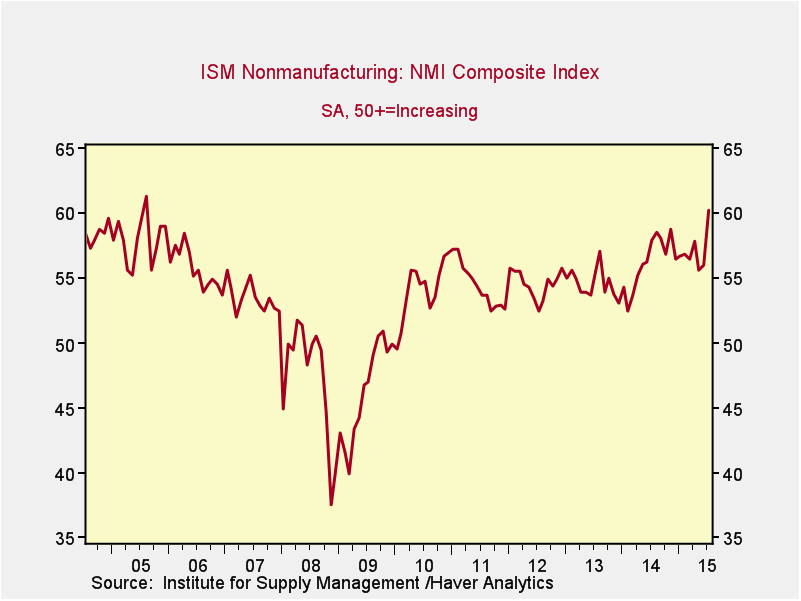
Building on the previous week’s good news, the economic statistics released last week showed continued improvement.
August 17, 2015
Building on the previous week’s good news, the economic statistics released last week showed continued improvement.
August 14, 2015
I got an e-mail from a reader the other day that really bothered me. A former investigative journalist worried about where the world was heading, she sent me a list of concerns, backed up with citations from more or less reputable sources.
The concerns themselves were nothing unusual—the U.S. debt and deficit, America’s position in the world, the status of the dollar. What struck me was the writer’s absolute conviction that the entire financial/economic system is broken.
August 13, 2015
Over the past month, we saw a market recovery that seemed like it would lead to new highs, a pullback on Greece and China, another recovery, then another pullback, and then a bounce up followed by another pullback on the Chinese devaluation.
What’s going on here?
August 12, 2015
The shocks from the Chinese yuan devaluation continue to echo around the world.
Today, the currency had its second-worst day (after yesterday) since the modern Chinese foreign exchange system launched in 1994, falling a further 1.6 percent against the dollar. Markets were down around the world, and U.S. interest rates dropped substantially.
August 11, 2015
Some mornings I wake up and wonder what I should blog about. Not today. Looking at my phone in bed to scan the headlines, I couldn’t believe the news—China had devalued its currency! This is a big deal in the financial world.
August 10, 2015
Last week was a good one for the economy. The data released met expectations and, in many cases, substantially exceeded them. Overall, accelerating growth seems likely in the second half of the year, and first-half growth may turn out better than the initial reports suggested.
August 7, 2015
Over the past couple of weeks, I’ve written about various headwinds the economy faces—among them, slow wage growth, a decline in consumer confidence, slow consumer spending growth, and declining business investment. All of these are real issues, and ones that have held the economy back over the past quarter.
At the same time, there’s been encouraging news this past week that suggests the slowdown, as last year, was temporary, and that faster growth is ahead.
August 6, 2015
Once again, it’s time for our monthly update on risk factors that have proven to be good indicators of economic trouble ahead.
For the first time in a while, there have been significant changes in two indicators—one encouraging and one more worrisome—but overall, conditions remain favorable.
August 5, 2015
In my latest Market Thoughts video, I discuss the U.S. and developed markets' recent bounce back after a difficult June. I also provide an update on U.S. economic performance, highlighting positive developments in the labor market.
August 4, 2015
Back in February, I looked at U.S. market valuations based on several different metrics, concluding that valuations were quite high—at or above the levels that prevailed before major corrections.
Episode 14
December 17, 2025
Episode 13
November 19, 2025
Episode 12
October 14, 2025
Episode 11
September 10, 2025
Episode 10
August 13, 2025
The information on this website is intended for informational/educational purposes only and should not be construed as investment advice, a solicitation, or a recommendation to buy or sell any security or investment product. Please contact your financial professional for more information specific to your situation.
Certain sections of this commentary contain forward-looking statements that are based on our reasonable expectations, estimates, projections, and assumptions. Forward-looking statements are not guarantees of future performance and involve certain risks and uncertainties, which are difficult to predict. Past performance is not indicative of future results. Diversification does not assure a profit or protect against loss in declining markets.
The S&P 500 Index is a broad-based measurement of changes in stock market conditions based on the average performance of 500 widely held common stocks. All indices are unmanaged and investors cannot invest directly in an index.
The MSCI EAFE (Europe, Australia, Far East) Index is a free float‐adjusted market capitalization index that is designed to measure the equity market performance of developed markets, excluding the U.S. and Canada. The MSCI EAFE Index consists of 21 developed market country indices.
One basis point (bp) is equal to 1/100th of 1 percent, or 0.01 percent.
The VIX (CBOE Volatility Index) measures the market’s expectation of 30-day volatility across a wide range of S&P 500 options.
The forward price-to-earnings (P/E) ratio divides the current share price of the index by its estimated future earnings.
Third-party links are provided to you as a courtesy. We make no representation as to the completeness or accuracy of information provided on these websites. Information on such sites, including third-party links contained within, should not be construed as an endorsement or adoption by Commonwealth of any kind. You should consult with a financial advisor regarding your specific situation.
Member FINRA, SIPC
Please review our Terms of Use.
Commonwealth Financial Network®