The Independent Market Observer

Monday Update: Inflation on the Rise

April 16, 2018

Last week, the news was largely about inflation, with producer and consumer prices leading the way. The week ahead will be a busy one for economic news. Reports will give us a look at consumer spending, the housing market, and industrial production and manufacturing. In other words, we’ll get an update on the entire economy.

Continue reading → Leave a comment

What to Watch for This Earnings Season

April 13, 2018

Earnings season is here again, and expectations are high. In fact, expected growth is at the highest level since 2011, with growth expected to continue through 2019. You would anticipate markets to respond positively. So, the fact that the stock market has instead just been bouncing around is a bit concerning. What is going on—and what does it mean for the future?

Continue reading → Leave a comment

The Consumer Price Index and the Powell Put: What's the Connection?

April 12, 2018

It seems to me that a couple of recent news items need to be put together in a way that, so far, I have not seen. Although the idea that inflation is rising and the discussion of the Fed’s rate increases are often connected, the link to the stock market has been neglected. Let’s see if we can make that connection.

Continue reading → Leave a comment

Monthly Market Risk Update: April 2018

April 11, 2018

Market risks come in three flavors: recession risk, economic shock risk, and risks within the market itself. So, what do these risks look like for April? Let’s take a closer look at the numbers.

Continue reading → Leave a comment

Economic Risk Factor Update: April 2018

April 10, 2018

March’s data continued to be good overall, although there was some pullback from February’s very strong reports. Job growth slowed substantially, which was the most notable concern. This is most likely not an immediate problem, however, as long-term trends remain favorable. More worrying is that while confidence remains high, the trend appears to be peaking for both consumers and business. Again, this is more of a change in trend rather than an immediate concern. Fed policy continues to be stimulative, which is helpful, despite the recent rate increase. Overall, this month’s economic data indicates that growth continues, although it may have peaked.

Continue reading → Leave a comment

Appearance on CNBC's Nightly Business Report, April 6, 2018 [Video] 

April 9, 2018

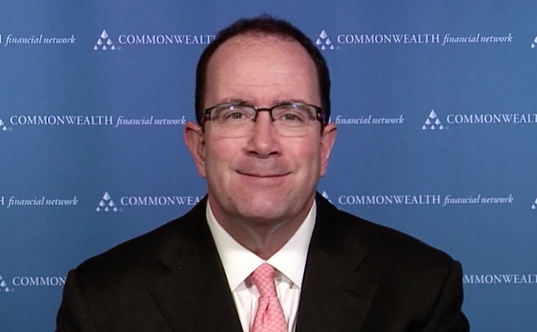
On Friday, I appeared on CNBC's Nightly Business Report (my segment starts at 10:19) to discuss the latest jobs report, more rate increases from the Fed, and what effect the tariffs may have on the market. Listen in to learn more.

Continue reading → Leave a comment

Monday Update: Business Confidence Pulls Back, But Remains High

April 9, 2018

Last week was a busy one for economic news, starting with the major business surveys. Inflation will be the focus this week, with producer and consumer prices due in the first half.

Continue reading → Leave a comment

The Jobs Report: As Bad As It Looks?

April 6, 2018

This morning, the jobs report came in with a surprising miss: the total number of jobs created dropped from 339,000 in February (including a 26,000 upward revision to the initial figure) to 103,000. This is quite a drop. At face value, it raises concerns about whether the economy has slowed dramatically. But while the headline number is weak, the report is not nearly as bad as it looks.

Continue reading → Leave a comment

A Look Back at Q1 2018 and Ahead to Q2

April 5, 2018

The first quarter of 2018 saw the end of the bull market. Not in stocks necessarily, as the upward trend remains intact, but certainly of the bull market in confidence. January was a strong month, but then the world changed. Markets dropped in early February, only to bounce and then drop again in March. Let’s review why things changed in Q1, plus what we might expect in Q2.

Continue reading → Leave a comment

Stock Market Update: Time to Pay Attention, Not to Panic

April 4, 2018

It has been a difficult couple of months in the stock market—and things have only gotten worse over the past couple of weeks. After the drop in early February, which took the S&P 500 down by almost 9 percent from the all-time high, the market bounced back. But it started dropping again in mid-March, which takes us to where we are right now: down 9.6 percent from early February.

Continue reading → Leave a comment

Subscribe via Email

AI_Community_Podcast_Thumb - 1


Episode 14
December 17, 2025

Episode 13
November 19, 2025

Episode 12
October 14, 2025

Episode 11
September 10, 2025

Episode 10
August 13, 2025

More


Hot Topics


New Call-to-action

Archives

see all

Subscribe


Disclosure

The information on this website is intended for informational/educational purposes only and should not be construed as investment advice, a solicitation, or a recommendation to buy or sell any security or investment product. Please contact your financial professional for more information specific to your situation.

Certain sections of this commentary contain forward-looking statements that are based on our reasonable expectations, estimates, projections, and assumptions. Forward-looking statements are not guarantees of future performance and involve certain risks and uncertainties, which are difficult to predict. Past performance is not indicative of future results. Diversification does not assure a profit or protect against loss in declining markets.

The S&P 500 Index is a broad-based measurement of changes in stock market conditions based on the average performance of 500 widely held common stocks. All indices are unmanaged and investors cannot invest directly in an index.

The MSCI EAFE (Europe, Australia, Far East) Index is a free float‐adjusted market capitalization index that is designed to measure the equity market performance of developed markets, excluding the U.S. and Canada. The MSCI EAFE Index consists of 21 developed market country indices.

The Dow Jones Industrial Average is computed by summing the prices of the stocks of 30 large companies and then dividing that total by an adjusted value, one which has been adjusted over the years to account for the effects of stock splits on the prices of the 30 companies. Dividends are reinvested to reflect the actual performance of the underlying securities.

The Russell 2000 is a market-capitalization weighted index, with dividends reinvested, that consists of the 2,000 smallest companies within the Russell 3000 Index. It is often used to track the performance of U.S. small market capitalization stocks.

One basis point (bp) is equal to 1/100th of 1 percent, or 0.01 percent.

The VIX (CBOE Volatility Index) measures the market’s expectation of 30-day volatility across a wide range of S&P 500 options.

The forward price-to-earnings (P/E) ratio divides the current share price of the index by its estimated future earnings.

Third-party links are provided to you as a courtesy. We make no representation as to the completeness or accuracy of information provided on these websites. Information on such sites, including third-party links contained within, should not be construed as an endorsement or adoption by Commonwealth of any kind. You should consult with a financial advisor regarding your specific situation.

Member FINRASIPC

Please review our Terms of Use

Commonwealth Financial Network®