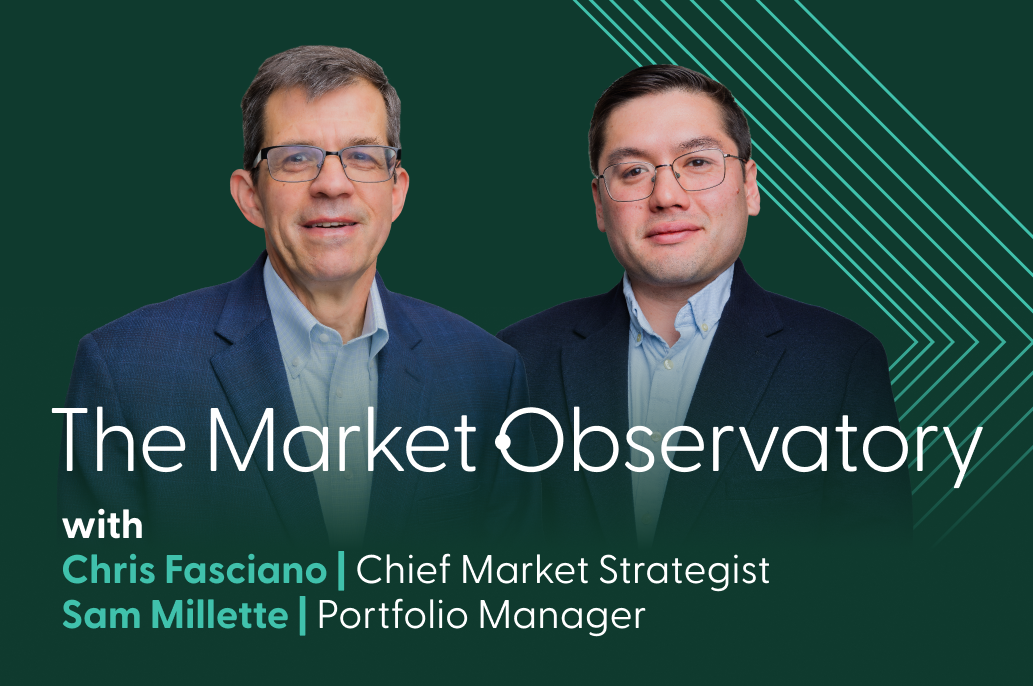
I spent last week down in the Florida Keys on vacation with my family. It was great. The weather was terrific, we went snorkeling and kayaking, and the place we stayed was very nice. Truly relaxing.
April 27, 2021
I spent last week down in the Florida Keys on vacation with my family. It was great. The weather was terrific, we went snorkeling and kayaking, and the place we stayed was very nice. Truly relaxing.
The 10-year Treasury yield has been climbing steadily since hitting a low of 0.5 percent in August 2020. This week, as of April 20, it was close to 1.56 percent. But the rise in rates hasn’t been equal across the broad spectrum of fixed income instruments. If you’re an investor who hasn’t made any changes to your fixed income portfolio since last August, it’s likely your exposures have changed. As a result, your investments may not be delivering the benefits you’re looking for. To assess the situation, take a look under the hood at your fixed income portfolio. But first you need to understand what current interest rates are telling us—and how inflation is involved.
April 22, 2021
Infrastructure is the backbone of any healthy economy, and America’s is in desperate need of refurbishment and investment. Indeed, President Biden campaigned on a promise to revitalize our aging infrastructure and to invest heavily in clean energy. Biden recently took the first step in that direction by introducing the $2.3 trillion American Jobs Plan. Let’s talk about this plan’s winners and losers, as well as what it could mean for your investment portfolio.
April 21, 2021
Today's post is from Michael Geraci, supervisor, retirement consulting investment services.
Last year was a challenging one for the financial markets, resulting in volatility for most investment products. In fact, the coronavirus pandemic presented the biggest test for most asset allocation products since the 2008 financial crisis. 401(k) investments were no exception, specifically target-date funds.
April 13, 2021
Today's post is from Jim McAllister, director, equity research.
Two weeks ago, after several weeks of significant improvement, the medical news started to worsen as case growth and positive test rates ticked back up. Whether this situation might signal the start of another wave of infection growth was an open question. The good news is that the answer looks to be no. Case growth, while slightly above recent lows, has stayed steady despite the continued reopening of the economy and the increasing spread of more contagious variants of COVID-19. While the battle against the pandemic continues, vaccinations are also continuing. They should end up choking the virus off before it gets to a significant fourth wave. The medical risks are still real, but they are lower than they were two weeks ago, and they’re dropping every week.
April 8, 2021
“The number one problem in today’s generation and economy is the lack of financial literacy.” —Alan Greenspan
The first quarter looks to be the turning point, both for the pandemic here in the U.S. and for the economic damage it has caused. While risks still remain, especially in the short term, the significant progress we made in the first two months of the year started coming to fruition in March, signaling that we are through the worst of it.
March 31, 2021
We have had a lot of good economic news recently, including the significant bounce in consumer confidence reported by the Conference Board. Consumer confidence rose by more than 20 percent last month, to the highest level since September, before the third wave. According to that increase, people are feeling much better about the economy and their place in it.
March 30, 2021
I wanted to use the title “Leverage, Margin Calls, and Stock Prices, Oh My” here. But I decided to go with the more specific title so readers would actually know what I was taking about. Those are the real themes, though, as the hedge fund/private family office Archegos is simply the latest iteration of an old and sad story.
Episode 16
February 11, 2026
Episode 15
January 15, 2026
Episode 14
December 17, 2025
Episode 13
November 19, 2025
Episode 12
October 14, 2025
The information on this website is intended for informational/educational purposes only and should not be construed as investment advice, a solicitation, or a recommendation to buy or sell any security or investment product. Please contact your financial professional for more information specific to your situation.
Certain sections of this commentary contain forward-looking statements that are based on our reasonable expectations, estimates, projections, and assumptions. Forward-looking statements are not guarantees of future performance and involve certain risks and uncertainties, which are difficult to predict. Past performance is not indicative of future results. Diversification does not assure a profit or protect against loss in declining markets.
The S&P 500 Index is a broad-based measurement of changes in stock market conditions based on the average performance of 500 widely held common stocks. All indices are unmanaged and investors cannot invest directly in an index.
The MSCI EAFE (Europe, Australia, Far East) Index is a free float‐adjusted market capitalization index that is designed to measure the equity market performance of developed markets, excluding the U.S. and Canada. The MSCI EAFE Index consists of 21 developed market country indices.
The Dow Jones Industrial Average is computed by summing the prices of the stocks of 30 large companies and then dividing that total by an adjusted value, one which has been adjusted over the years to account for the effects of stock splits on the prices of the 30 companies. Dividends are reinvested to reflect the actual performance of the underlying securities.
The Russell 2000 is a market-capitalization weighted index, with dividends reinvested, that consists of the 2,000 smallest companies within the Russell 3000 Index. It is often used to track the performance of U.S. small market capitalization stocks.
One basis point (bp) is equal to 1/100th of 1 percent, or 0.01 percent.
The VIX (CBOE Volatility Index) measures the market’s expectation of 30-day volatility across a wide range of S&P 500 options.
The forward price-to-earnings (P/E) ratio divides the current share price of the index by its estimated future earnings.
Third-party links are provided to you as a courtesy. We make no representation as to the completeness or accuracy of information provided on these websites. Information on such sites, including third-party links contained within, should not be construed as an endorsement or adoption by Commonwealth of any kind. You should consult with a financial advisor regarding your specific situation.
Member FINRA, SIPC
Please review our Terms of Use.
Commonwealth Financial Network®